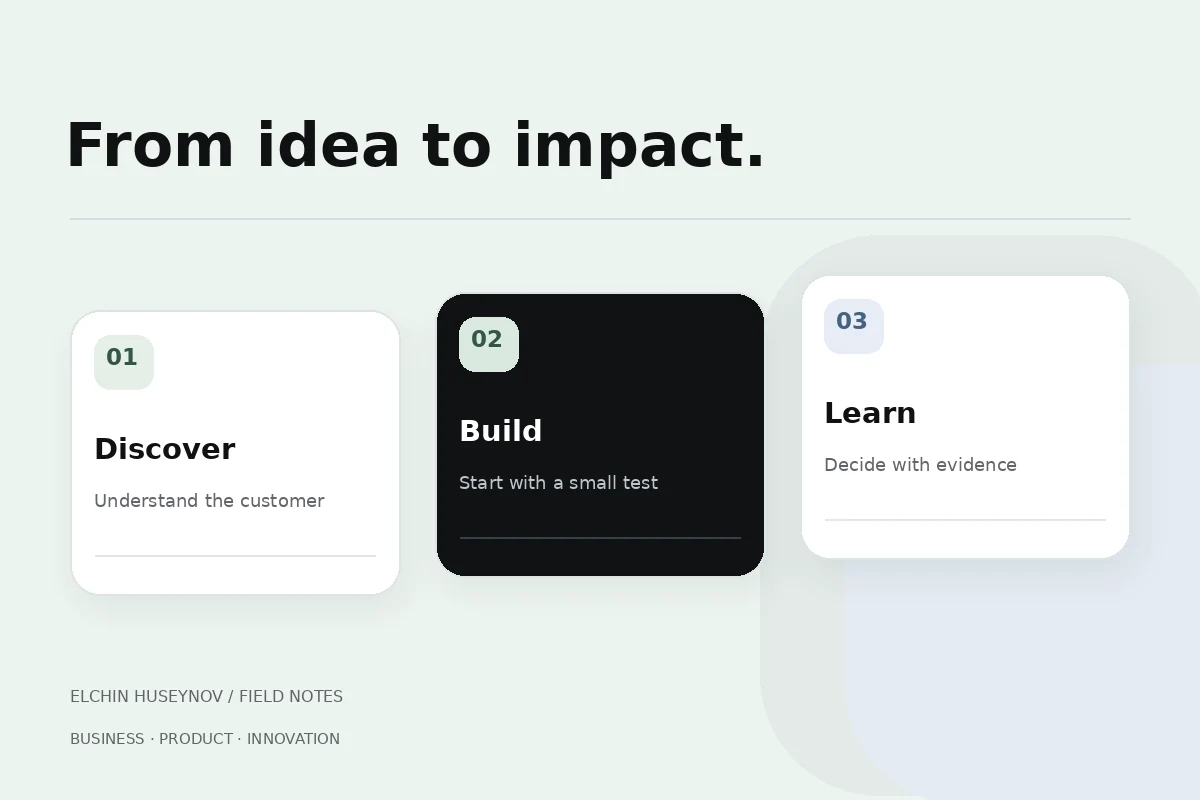
An MVP starts with a learning question. Instead of asking how many features the first release needs, ask which important assumption it should test. A first release connects a customer problem, a proposed solution and a business model to something you can actually observe.
Write the problem before the feature list
Describe who experiences the problem, when it appears and how they solve it today. A service business asking for an online calendar might really be struggling with bookings spread across phone calls and messages. The calendar is part of a solution; the problem statement is what guides product decisions.
- Customer: a small service business managing bookings manually.
- Current process: calls, messages and separate notes.
- Pain: lost time and booking mistakes.
- Desired outcome: complete a booking more clearly and reliably.
Separate the assumptions
Whether the customer has a serious problem, whether they will use your solution and whether they will pay are different assumptions. Select the riskiest one. Interviews may help clarify the problem. A prototype may test a journey. A simple working workflow may reveal whether people will use it repeatedly.
Define a complete minimum journey
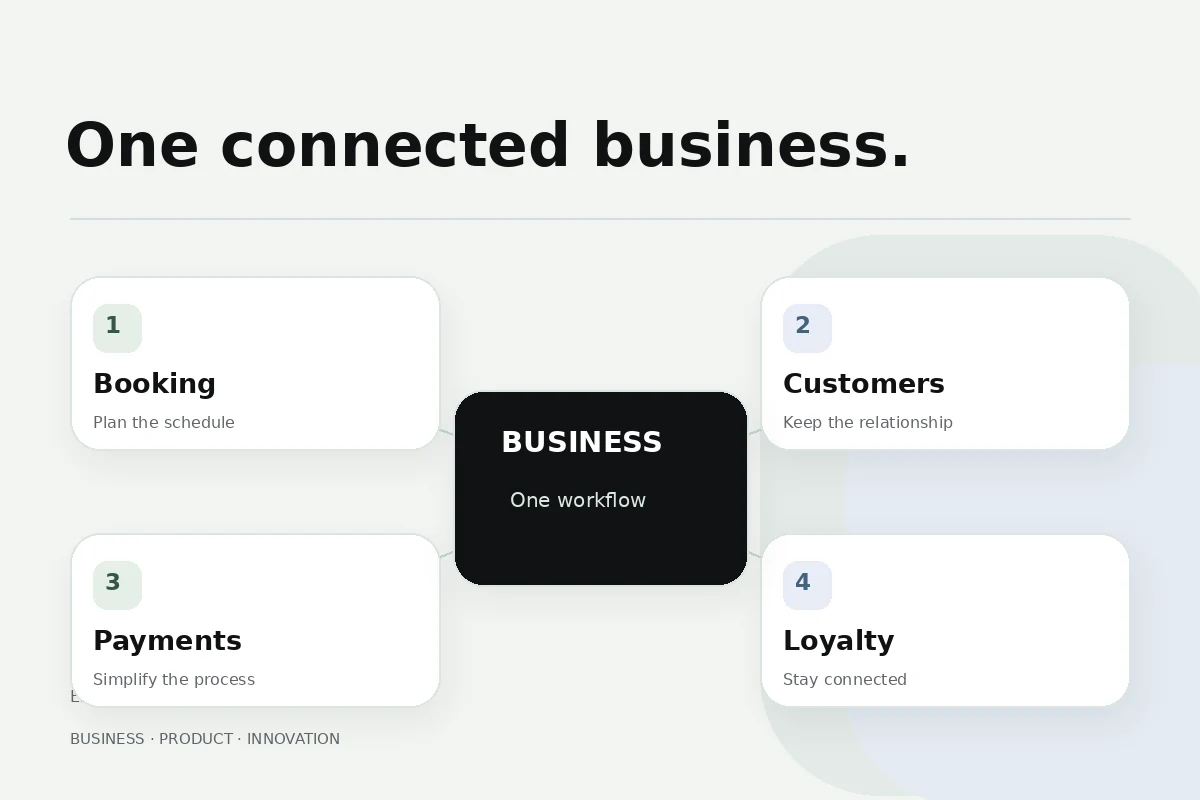
Your first release should let a customer complete a specific job. For booking, service selection, time selection, customer details and confirmation need to work together. Extra CRM, loyalty and marketing features can wait when they do not answer the current learning question.
Plan how you will learn
Before releasing, define whom you will observe, which behaviors matter and what decision the evidence will support. Registration is not the same as completing the core job. Page views are not proof of demand. Combine a few relevant measures with customer conversations.
Work closely with the first customer
Ask people to describe their most recent use, rather than whether they like the product. Where did they stop? Which tasks stayed outside the system? What required help? These details often reveal more than a broad feature request.
On Mink and Tad1, I use the same approach: understand the process, clarify the problem and iterate from customer feedback. Write a one-page framework covering the customer, problem, main assumption, minimum journey and the outcome to measure. Use it to review the backlog.
The purpose of an MVP is to answer the right question sooner.
Book a session below if you want to clarify your MVP scope and product roadmap.
Questions and answers
Is an MVP the same as a prototype?+
No. A prototype can test a user journey; an MVP is an initial solution selected to test a specific assumption in a real context.
How many features should the first version contain?+
There is no fixed number. Include enough to complete the core job and answer the learning question.
Let’s plan your product idea
Let’s find the right next step for your business, product or team.
Let’s plan your product idea